

Diagnostic
When you want confidence in the leader taking the seat — and a strong understanding of what it will take to set them up to succeed.
What It Is
Diagnostic works the same wherever you bring it in — before a hire or promotion is confirmed, right as someone steps into the role, or later, once old patterns and muscle memory have quietly taken over. What it reads is the same regardless of timing: the natural tendencies and pressure responses actually driving how this leader navigates the move, and what support or partnership is needed to keep them on track.
It's not a snapshot of competence. It's a read on fit — what this particular leader needs to succeed in this particular role, at this particular organisation.
What It Isn’t
Not a confirmation or rejection. There's no good or bad profile — only patterns, and what they mean in this specific context.
Not a competence test. It doesn't measure whether someone can do the job. It reads the strengths they bring to the role, where the gap sits, and what behaviours might become barriers — under pressure, in this specific culture, with this specific team.
Not a stand-alone artefact. It's read against the actual role and transition.
Not a diagnosis. It doesn't name what's wrong with someone. It names what they need to succeed.
Use Cases
A general rule of thumb: for leaders three to six months into a transition, what I recommend depends on where they actually are — the core instruments are always the starting point, with HBRI and Judgment added based on their level and what the role specifically demands.
Hogan Suite of Assessments
What It Is
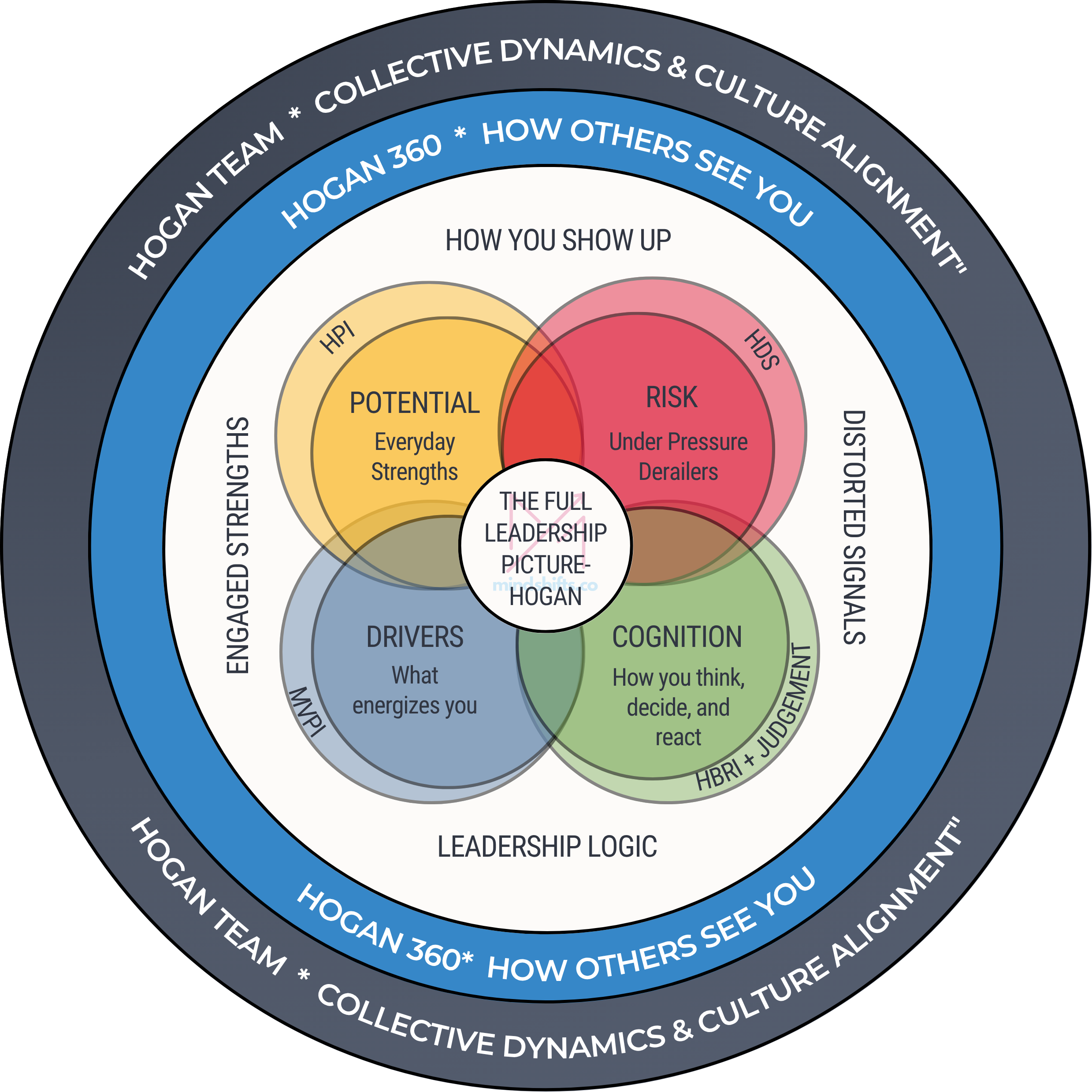
The Hogan Suite is a personality assessment — three core instruments (plus Reasoning and Judgment, where relevant) that build a picture of how someone thinks, behaves, and is motivated. It's used to understand a leader as they actually are, not as an interview or a CV might suggest.
Why Hogan
The read is contextualised to the actual role and transition, not delivered as a generic profile — which is what makes it durable. The same assessment can be revisited across role changes over 4-5 years, read fresh against whatever's different this time—whether that's a new title, a new team, or a role reshaped by AI adoption. Nothing about the leader needs retesting. What changes is the lens through which it's read.
What Each Instrument Reveals
HPI | Hogan Personality Inventory
How someone operates day to day — their working style, strengths, and how they show up when things are going well.
HDS | Hogan Development Survey
The patterns that surface under stress, deadline, or scrutiny — tendencies invisible in calm conditions, and very visible in a hard quarter.
MVPI | Motives, Values, Preferences Inventory
What actually drives someone's decisions, and where that might clash with what a new role or culture expects of them.
HBRI | Cognitive Reasoning Inventory
How someone approaches a problem and processes information — particularly under the kind of load a transition adds.
Judgment | Judgment Report
How someone approaches ambiguous, high-stakes decisions — the exact kind of decision a transition is full of, before there's a track record to fall back on.
360 | Hogan 360
A report that measures how the leader is actually being experienced by their manager, peers, and reports. The gap between how someone sees themselves and how they're seen is often where the real signal is.
Team | Hogan Team Report
Built from each member's individual results — surfaces where a team's composition creates friction or blind spots before it shows up as visible conflict, rather than diagnosing it after the fact.
How It Works
Alignment Call — with the sponsor, contracting, expectations, and confirming which instruments will actually provide the insights needed.
Assessment — the leader completes the relevant Hogan instruments, administered and set up on our side.
Debrief — once results are in, available within two weeks. This is where the data becomes a specific plan, not a raw report handed over.
30-Day Check-In — a chance to see what's actually showing up since the debrief, for both the leader and the sponsor, and whether another round is needed.
What You Walk Away With
The Sponsor
A written summary naming the areas worth watching, and a recommendation on next steps.
A clear answer on whether ongoing support is warranted, and what shape it should take.
The 30-day check-in — how insights are translating into more effectiveness.
The Leader
The detailed Hogan Leadership Profile — the full picture, not a summary.
Coaching and development recommendations specific to this transition, with next steps mapped out.
The 30-day check-in — a chance to revisit how insights are being incorporated into working rhythm.
Investment
Investment
Starts at SGD 3,250
Format
Assessment + 90-min debrief for leader
Our edge: A written note for organisation with recommendations, and a check-in session.
Best for
Leader you are watching closely — a potential new senior or executive hire
If the report points to something that needs ongoing support, it flows directly into Integrative.
The right conversation, early, changes what happens next.
FAQs
-
If it's been taken within the last three to four years, no. The same assessment can be re-read against a new role, a new transition, or a role that's shifted shape — including where AI has changed what it requires. What changes is the lens it's read through, not the underlying data.
-
Everything discussed with the leader is confidential, and so is everything discussed with the sponsor — neither side hears the substance of the other's conversations. Whether the assessment results themselves are shared, and in what form, depends on what's agreed with the organisation at the outset.
-
It can be — it's just as useful before a decision as after one. But it's not a pass/fail test. There's no good or bad profile — only patterns, what they mean for this specific role, and the conditions under which this leader can actually thrive.
-
The results don't determine whether coaching support is required — but recommendations are provided. If you choose to act on them, the Diagnostic flows directly into Integrative. If you don't, you still walk away with a clear, evidence-backed answer either way.